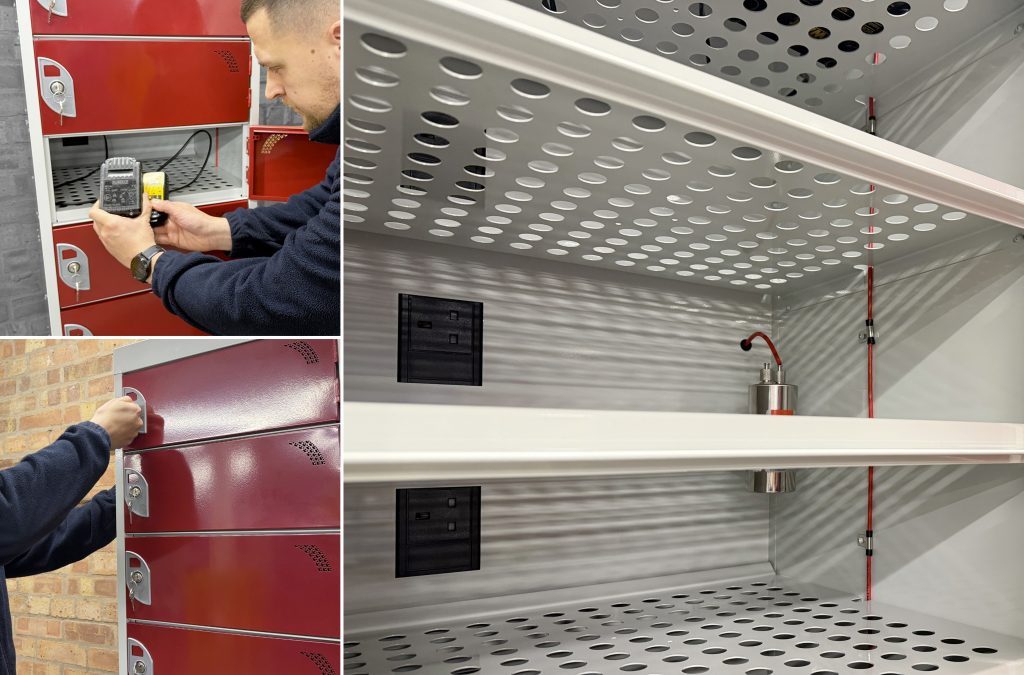
Fire Suppression Charging Lockers: The Latest Evolution of the Locker Range
Posted on August 13th 2026 by Rebecca Brophy - Marketing & Business Development Co-ordinator.
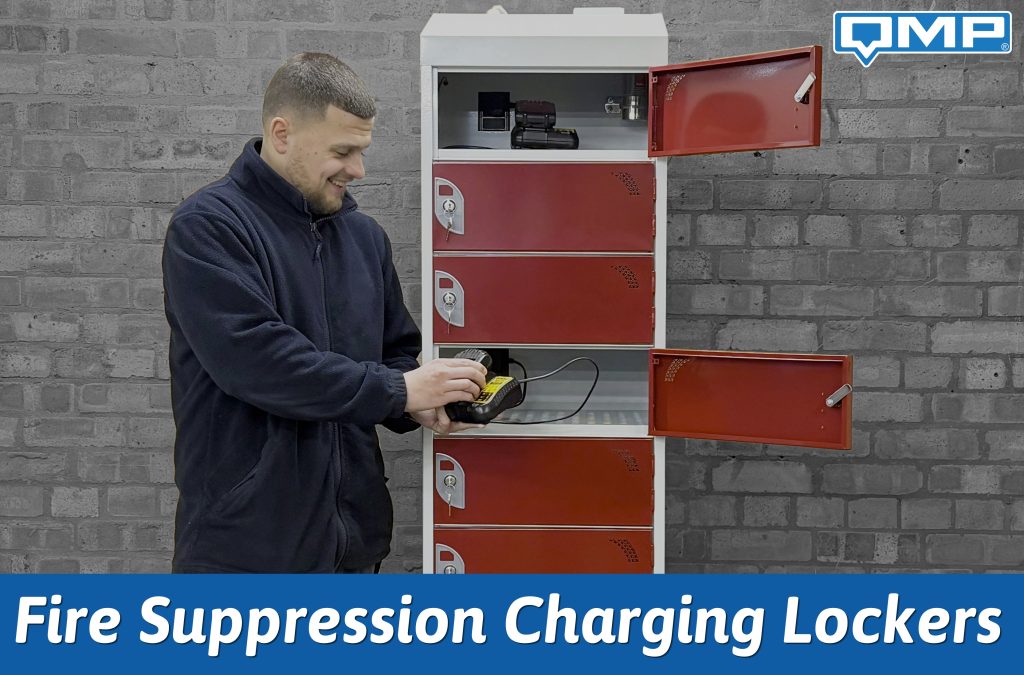
Why Fire Suppression Charging Lockers Are Becoming Essential in Modern Workplaces?
As businesses continue to adopt more battery-powered equipment, a new safety challenge is emerging across workplaces. Laptops, tablets, power tools, scanners, radios and handheld devices all rely on lithium-ion batteries. While these technologies improve productivity and flexibility, they also introduce an often-overlooked fire risk.
The question many organisations are now asking is
no longer: “How do we charge devices efficiently?” But rather: “How do we charge them safely?”
This is where fire suppression charging lockers are becoming an essential part of modern workplace infrastructure.
The Growing Risk of Lithium-Ion Batteries in the Workplace
Lithium-ion batteries power much of today’s equipment because they are lightweight, rechargeable and energy efficient. However, when damaged, overcharged, defective or exposed to excessive heat, these batteries can experience a dangerous phenomenon known as thermal runaway. Thermal runaway is a chain reaction that causes the battery to rapidly overheat, release toxic gases and potentially ignite.
Battery fires are particularly challenging because they:
🔥Spread quickly
🔥Burn at extremely high temperatures
🔥Can reignite after appearing extinguished
🔥Produce hazardous smoke
What Is a Fire Suppression Charging Locker?
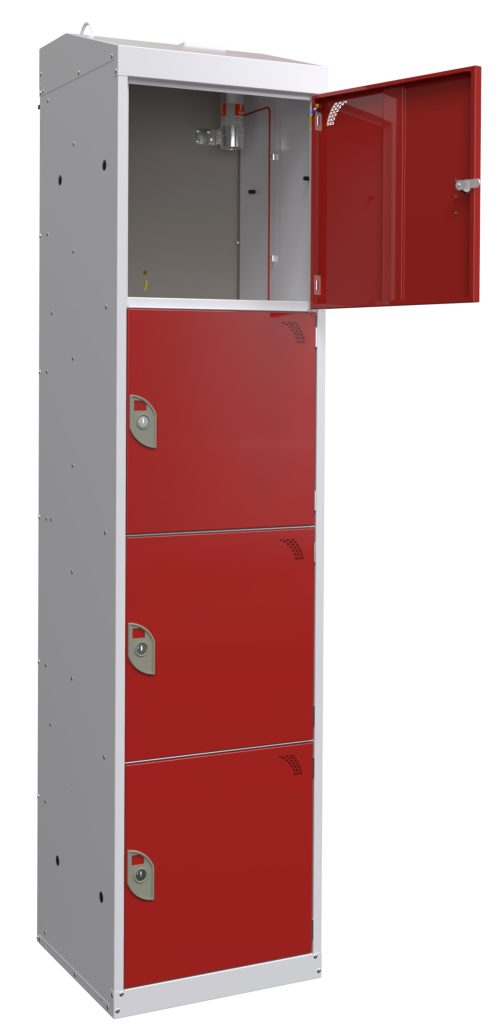
A fire suppression charging locker is a secure storage solution designed specifically to charge battery-powered devices while incorporating integrated fire protection technology.
Unlike standard lockers, these specialist units are engineered to help contain and suppress battery-related incidents before they escalate.
Choosing a Fire Suppression Charging Locker…
🔥How many users will require access
🔥The types of devices being charged
🔥Whether USB-C charging is required
🔥Available floor space
🔥Existing fire safety procedures